The global Electronic Bill Presentment and Payment (EBPP) market, valued at approximately $16.5 billion in 2025, is projected to reach $41.7 billion by 2035, reflecting sustained enterprise investment in digital billing and payment infrastructure.
This growth is mirrored in adoption patterns – nearly 62.8% of transactions now occur through biller-direct models, with close to 50% of interactions happening on mobile devices, signaling a shift toward more integrated and customer-centric payment experiences.
As a result, EBPP is evolving beyond bill delivery to become a core enabler of payment execution, visibility, and cash flow predictability within modern invoice-to-cash operations. This blog examines the fundamentals of EBPP, including how it works, its key benefits, and its role within the evolving digital finance landscape.
Table of Contents
What Is Electronic Bill Presentment and Payment (EBPP)?
How Does Electronic Bill Presentment and Payment (EBPP) Work?
Example of EBPP in Action
Benefits of EBPP
8 Steps to Implement an EBPP Solution
Potential Challenges and Solutions of EBPP
How HighRadius Can Help
What Is Electronic Bill Presentment and Payment (EBPP)?
Electronic Bill Presentment and Payment (EBPP) is a digital system that enables businesses to deliver bills electronically and allows customers to view and pay those bills through integrated online payment channels.
It replaces traditional paper-based billing by combining three core capabilities:
Electronic bill presentment through portals, email, or mobile platforms
Integrated payment options such as cards, bank transfers, and digital wallets
Real-time tracking and visibility into invoice and payment status
EBPP solutions streamline the end-to-end billing and payment experience, reducing manual effort, improving payment adoption, and accelerating cash collections.
How Does Electronic Bill Presentment and Payment (EBPP) Work?
EBPP facilitates the exchange of funds between parties electronically. Here’s a step-by-step process:
1. Bill presentment
Electronic Delivery – Bills are delivered through digital channels such as email, secure portals, or mobile applications, eliminating reliance on paper-based billing.
Notification – Automated alerts inform customers when a new bill is available, improving visibility and reducing missed payments.
Access and Review – Customers can securely access bills and view details such as due dates, payable amounts, and itemized charges.
2. Payment processing
Payment Method Selection – Multiple digital payment options, such as credit cards, bank transfers, or other electronic methods, are made available within the billing interface.
Payment Execution – Transactions are processed through secure, integrated systems, enabling seamless and timely payment completion.
3. Confirmation and Reconciliation
Payment Confirmation – Notifications are generated upon successful payment, providing a digital record of the transaction.
Automated Record-Keeping – Payment data is automatically updated within the system, enabling accurate tracking and simplifying reconciliation.
Example of EBPP in Action
A typical EBPP implementation can be illustrated through a recurring billing scenario in industries such as utilities or telecommunications services.
Bill Presentment:
Electronic bill presentment: The organization generates invoices and delivers them through digital channels such as email, customer portals, or mobile applications
Automated notifications: Customers are notified when a new bill is available, ensuring timely awareness and access.
Invoice visibility: Detailed billing information, including due dates, amounts, and itemized charges, is made available within a secure interface.
Payment Processing:
Integrated payment options: Customers are provided with multiple digital payment methods, including cards, bank transfers, and other electronic modes.
Seamless payment experience: Payments are completed within the same interface, eliminating the need to switch between systems.
Confirmation and Record Management
Payment confirmation: Upon successful payment, digital confirmations are generated, providing a clear record of the transaction.
Automated updates: Payment data is automatically recorded and reflected in the system, ensuring accurate tracking and simplified reconciliation.
Benefits of EBPP
Electronic Bill Presentment and Payment (EBPP) delivers measurable improvements across billing efficiency, payment behavior, and cost optimization, making it a critical component of modern electronic billing strategies.
1. Faster Payments and Improved Cash Flow
Organizations using digital invoice presentment and payment solutions have achieved up to a 20% reduction in DSO, accelerating cash flow and improving working capital efficiency.
2. Increased Payment Adoption
Enterprises have reported up to a 30% increase in electronic payment adoption, driven by convenient, self-service digital payment experiences.
3. Lower Operational and Processing Costs
Automation and optimized payment methods can reduce payment processing costs by up to 80% while eliminating expenses related to paper, postage, and manual handling.
4. Improved Productivity and Efficiency
Automating billing and payment workflows can deliver up to a 50% improvement in team productivity, enabling finance teams to focus on higher-value activities.
5. Enhanced Visibility and Control
Real-time access to invoice and payment data improves tracking, reduces reconciliation effort, and enables more accurate cash flow forecasting.
8 Steps to Implement an EBPP Solution
Implementing an EBPP solution can streamline the billing process, improve cash flow, and enhance customer satisfaction. Implementation, however, requires a structured approach to ensure seamless integration, operational efficiency, and long-term scalability. Here’s a step-by-step guide to help implement an EBPP solution effectively:
1. Assess your Needs
Requirement Assessment – Organizations need to evaluate their billing and payment requirements, including transaction volumes, supported payment methods, integration needs, and usability expectations
Define Objectives – Clear goals should be established, such as reducing processing time, lowering operational costs, improving customer experience, or enhancing security.
2. Choose the Right EBPP Provider
Research Providers – Available EBPP providers should be assessed based on capabilities such as reliability, security, customer support, and integration flexibility.
Compare Solutions – Different platforms can be compared across cost, functionality, and ease of use, supported by case studies and customer references.
Select a Provider – The final selection should align with business requirements, budget considerations, and long-term scalability needs.
3. Plan the Implementation
Project Planning – A detailed implementation roadmap should be developed, outlining timelines, responsibilities, and key milestones.
Data Preparation – Billing and customer data should be validated, cleansed, and structured to ensure accuracy during system deployment.
4. Integrate with Existing Systems
System Integration – The EBPP solution should be able to integrate with existing ERP, CRM, or accounting systems to enable seamless data flow.
Testing – Comprehensive testing should be conducted to validate invoice generation, payment processing, and system interoperability.
5. Customize and Configure
Customization – The platform can be tailored to align with organizational branding and business workflows.
Configuration – Key parameters, including payment methods, billing cycles, and security settings, should be configured in line with regulatory and operational requirements.
6. Train Internal Team
Training Enablement – Teams should be trained on system usage, key workflows, and exception handling processes.
User Manuals and Resources – Documentation, FAQs, and internal guides should be made available to support ongoing usage.
7. Launch and Monitor
Phased rollout –A controlled rollout approach, such as a pilot or soft launch, can help identify and address potential issues.
Full deployment – Once validated, the solution can be deployed across the broader customer base with appropriate communication.
Performance monitoring – Ongoing monitoring should focus on key metrics such as payment timelines, error rates, and user adoption.
8. Provide Ongoing Support
Customer Support – Support mechanisms should be established to address user queries and issues.
Continuous improvement – Regular updates and optimizations should be implemented to enhance system performance, security, and user experience.
Potential Challenges and Solutions of EBPP
While EBPP delivers significant benefits, organizations may encounter challenges during implementation and adoption. These challenges, however, can be effectively addressed with the right approach.
Aspects
Challenge
Solution
Technical Integration
Integrating EBPP with existing ERP, billing, and payment systems can introduce complexity and potential system inconsistencies.
A structured implementation approach, supported by robust APIs, thorough testing, and vendor expertise, ensures seamless integration and stable system performance.
User Adoption
Transitioning from traditional billing methods to electronic billing can lead to resistance from customers and internal teams.
Clear communication, intuitive user interfaces, and guided onboarding, supported by training and customer support, can significantly improve adoption rates.
Security & Compliance
Handling sensitive billing and payment data introduces concerns around data security, privacy, and regulatory compliance.
Implementing strong encryption, secure payment gateways, and regular compliance audits ensures data protection and builds user confidence.
How HighRadius Can Help
HighRadius offers a comprehensive, cloud-based solution to automate and streamline the Order to Cash (O2C) process for businesses. Our solution aims to boost the efficiency of your team with our end-to-end solution, including Collections Management, Cash Application, Deductions Management, Electronic Invoicing, Payment Gateway, Surcharge Management, Interchange Fee Optimizer, Credit Cloud, & dotOne Analytics.
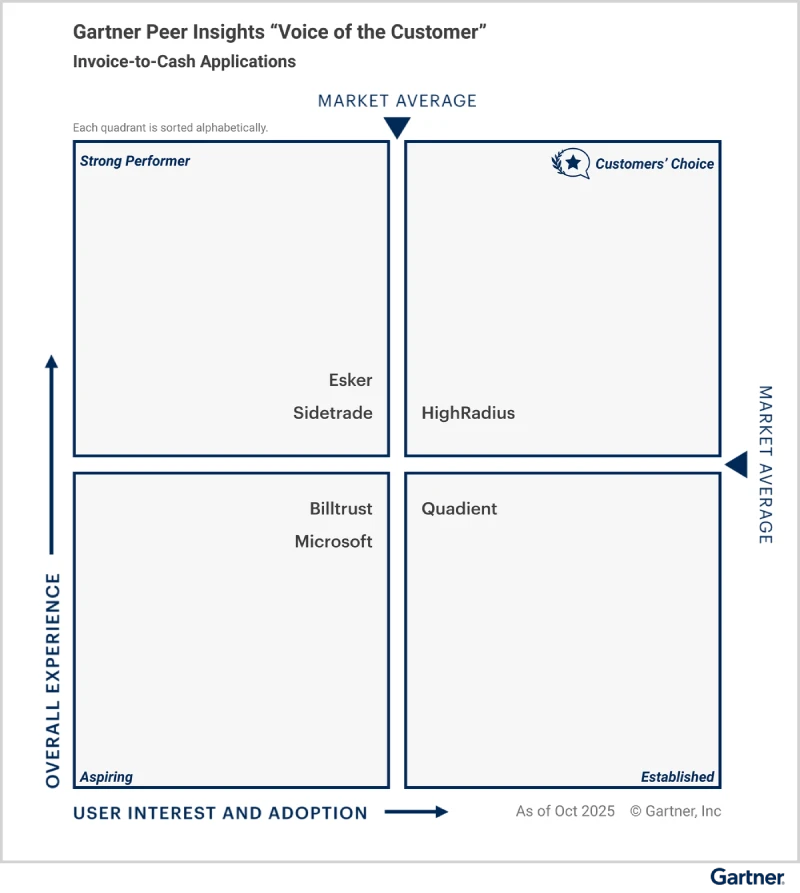
Trusted by 1500+ companies to deliver speed-to-value, including P&G, Ferrero, Johnson & Johnson, and Danone, HighRadius has been a Gartner Magic Quadrant Leader 3 years in a row, placed highest in the ability to execute and furthest in the completeness of vision.
FreedaGPT, a Gen AI assistant integrated with LiveCube, a spreadsheet-like tool, helps manage data, analyze information, and generate insightful reports—all using simple, plain English commands.
HighRadius’ AI-powered Electronic Invoicing Solution enhances customer experience with a self-serve portal for buyers and multi-channel invoice delivery, increasing billing analyst productivity by 50%.
Learn more about HighRadius’ EIPP Solution
Reduce DSO and connect buyers and suppliers globally with seamless invoicing & payments.
Cut support calls by 50% as buyers self-serve invoices and payments online.
Email Invoice Delivery
Get paid faster with automated invoices and real-time delivery tracking.
e-Adoption Campaign Management
Drive portal adoption effortlessly with targeted campaigns and real-time insights.
Frequently Asked Questions (FAQs)
1. How do electronic billing presentment and payment systems work?
EBPP systems deliver bills electronically via email, portals, or apps. Users can view, review, and pay their bills online using various payment methods, ensuring a quick and efficient process.
EBPP systems deliver bills electronically via email, portals, or apps. Users can view, review, and pay their bills online using various payment methods, ensuring a quick and efficient process.
2. What is EBPP mode of payment?
EBPP modes of payment typically include credit cards, debit cards, and direct bank transfers, allowing users to pay bills conveniently and securely online.
EBPP modes of payment typically include credit cards, debit cards, and direct bank transfers, allowing users to pay bills conveniently and securely online.
HighRadius Named an IDC MarketScape Leader for the Second Time in a Row For AR Automation Software for Large and Midsized Businesses
HighRadius stands out as an IDC MarketScape Leader for AR Automation Software, serving both large and midsized businesses. The IDC report highlights HighRadius’ integration of machine learning across its AR products, enhancing payment matching, credit management, and cash forecasting capabilities.
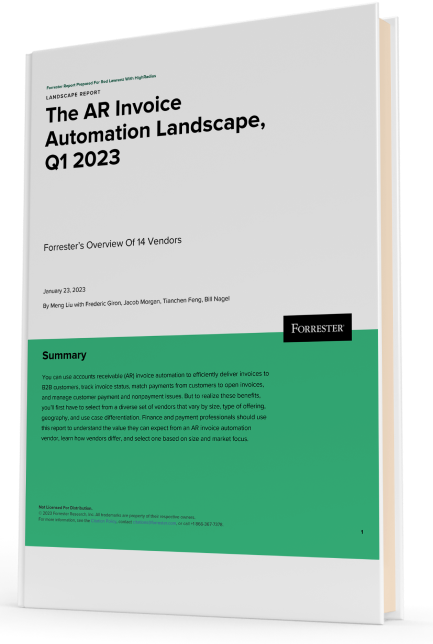
Forrester Recognizes HighRadius in The AR Invoice Automation Landscape Report, Q1 2023
Forrester acknowledges HighRadius’ significant contribution to the industry, particularly for large enterprises in North America and EMEA, reinforcing its position as the sole vendor that comprehensively meets the complex needs of this segment.